

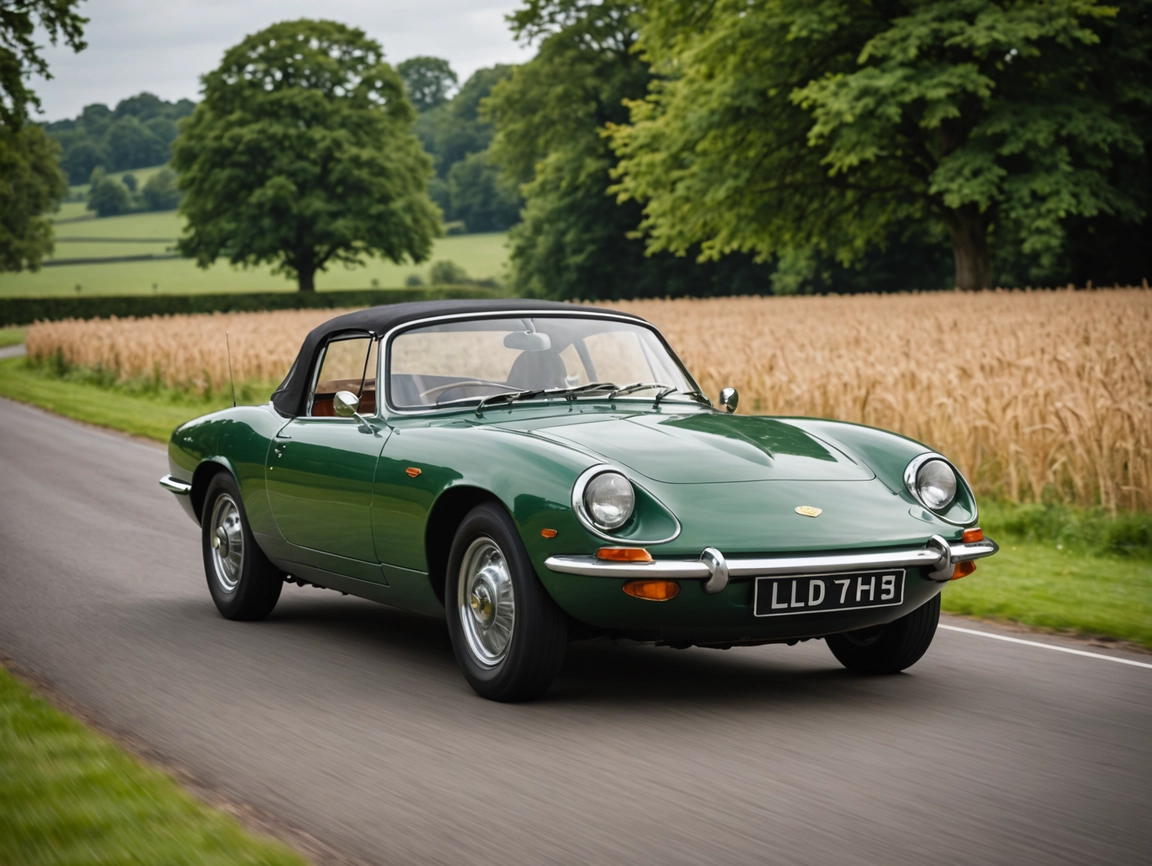
Everything you need to know about Colin Chapman’s groundbreaking sports car—from identifying the right model to avoiding costly restoration mistakes.
📋 In This Guide
- The Legend: Why the Elan Matters
- Model Guide: S1 Through Sprint
- Common Problems & What to Watch For
- Maintenance Essentials
- Restoration Considerations & Costs
- Market Values & Pricing Guide
- Essential Resources
- Frequently Asked Questions
The Legend: Why the Elan Matters
When Colin Chapman introduced the Lotus Elan in 1962, he didn’t just create another sports car—he redefined what a small, lightweight sports car could be. The Elan’s revolutionary backbone chassis, sophisticated all-independent suspension, and torquey twin-cam engine established a formula so effective that Mazda famously used an Elan as the benchmark when developing the MX-5 Miata three decades later.
The Elan represents Chapman’s famous philosophy of “simplify, then add lightness.” Weighing just 1,260-1,630 lbs depending on the model, the Elan delivers driving dynamics that embarrass cars with twice the horsepower.

Key Stats
- Production Years: 1962-1973 (Classic)
- Units Produced: ~12,000
- Known Survivors: ~1,100
- 0-60 mph (Sprint): 6.6 seconds
What Makes the Elan Special
- ✓ Steel backbone chassis — revolutionary for 1962
- ✓ All-independent suspension — exceptional handling
- ✓ Lotus Twin Cam engine — eager and rev-happy
- ✓ Four-wheel disc brakes — ahead of its time
- ✓ Fiberglass body — no rust on the body!
- ✓ Under 1,300 lbs (base) — lightness is key
Model Guide: S1 Through Sprint (1962-1973)
Understanding the Elan variants is crucial whether you’re buying, maintaining, or restoring one. Each series brought meaningful improvements—and some introduced new challenges.
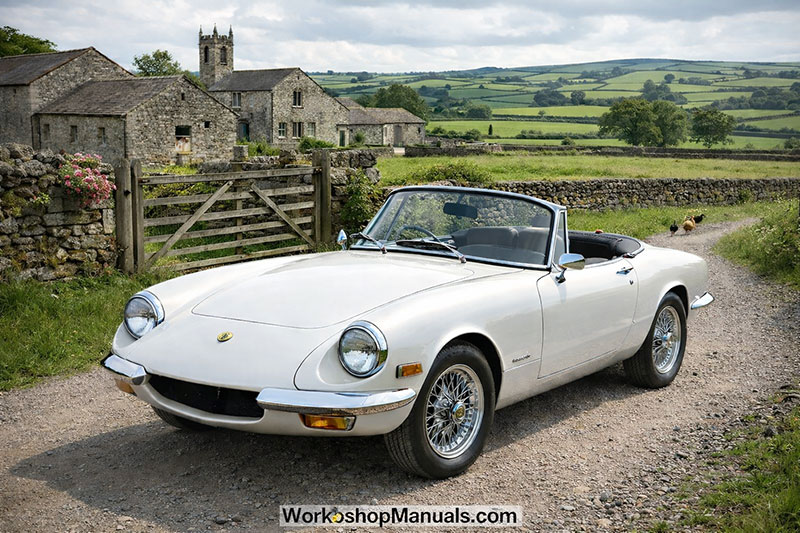
| Model | Years | Key Features | Approx. Value (2024) |
|---|---|---|---|
| S1 | 1962-64 | Purest, lightest, lift-up windows | $40-82K |
| S2 | 1964-66 | Larger brakes, improved interior | ~$30K avg |
| S3 | 1966-68 | FHC option, electric windows, Weber carbs | ~$25-35K |
| S4 | 1968-71 | Flared arches, wider tires | ~$24-38K |
| Sprint ⭐ | 1970-73 | Big-valve 126hp, two-tone paint | $38-75K+ |
| +2 | 1967-75 | 2+2 seating, longer wheelbase | $20-50K |
Series 1 (1962-1964) — The Purist’s Choice
The S1 is the lightest and most original expression of Chapman’s vision. Identifiable by its lift-up side windows, exposed door hinges, and simpler interior trim. These are the rarest and most valuable.
Series 2 (1964-1966) — Refined Evolution
The S2 addressed early criticisms with larger brakes, improved interior appointments, and better weather sealing. Most enthusiasts consider the S2 the sweet spot of originality and usability.
Series 3 (1966-1968) — The Turning Point
The S3 introduced the Fixed Head Coupe (FHC) option alongside the traditional drophead. Weber carburetors replaced the earlier Strombergs. Important note: The S3 switched to a smaller radiator—the beginning of the Elan’s notorious overheating issues.
Series 4 (1968-1971) — The Glamour Model
Flared wheel arches and wider tires gave the S4 a more aggressive stance. Interior quality improved further. However, the radiator shrank again, making overheating worse.
Sprint (1970-1973) — The Ultimate Elan
The most desirable variant features the “big-valve” Tony Rudd-developed engine producing 126hp. Identifiable by its distinctive two-tone paint scheme (silver over red, silver over blue, or gold over white).
+2 (1967-1975) — Practical Lotus
The longer-wheelbase four-seater (+2) offers more interior space and a civilized grand touring character. Values are climbing as enthusiasts discover these make excellent daily drivers.
📝 What About the M100 Elan (1989-1995)?
Lotus revived the Elan name for a front-wheel-drive roadster powered by an Isuzu-sourced turbocharged engine. While sharing the name, the M100 is an entirely different car. Values are more affordable ($8-15K for good examples), making it an accessible entry point to Lotus ownership.
Common Problems & What to Watch For
The Elan rewards knowledgeable owners but punishes negligence. Understanding these common issues will help you evaluate potential purchases and maintain your car properly.
1. Chassis Rust — The #1 Killer ⚠️ CRITICAL
The Elan’s steel backbone chassis is notoriously prone to corrosion, particularly around the front shock tower mounts and floor pan areas. This is the single most important item to inspect on any Elan.
Warning Signs: Cracking paint near shock towers, visible rust bubbles, soft spots when pressing floor area, misaligned doors or body panels, handling that feels “loose”
Solutions:
- Lotus Replacement Chassis (LR stamped): Galvanized factory replacement—actually preferable to original
- Spydercars Spaceframe: Modern interpretation, 50%+ stiffer than original
⚠️ Important: An original, unrestored chassis is NOT a selling point—it’s likely compromised. Most surviving Elans have replacement chassis, and this is a good thing.
2. Overheating — Especially S3/S4/Sprint ⚠️ HIGH
From the S3 onward, Lotus downsized the radiator, and cooling became inadequate. The Twin Cam engine runs optimally at 75°C (167°F), but stock S3/S4/Sprints often run 90-95°C.
Solutions:
- Aluminum crossflow radiator (essential upgrade)
- Swirl pot installation
- Electric fan conversion
3. Electrical System — “Lucas, Prince of Darkness” ⚠️ HIGH
British electrical systems of this era are legendary for their unreliability. The Elan’s wiring, now 50+ years old, develops high resistance from corrosion.
Solutions:
- Negative ground conversion
- Alternator conversion
- Powerspark electronic distributor (~$200)
4. Rotoflex Driveshaft Couplings ⚠️ CRITICAL
The rubber “doughnut” couplings can fail catastrophically, potentially causing wheel separation. This is a safety-critical inspection item.
Solutions:
- CV joint conversion (recommended permanent fix)
- “Safety half-shafts” if retaining Rotoflex
- Regular inspection every 10,000 miles
5. Water Pump Access
On unmodified engines, replacing the water pump requires removing the cylinder head. Look for a ring of bolt heads around the water pump housing—this indicates conversion to a removable water pump (a plus when buying).
6. Oil Leaks
Some oil seepage is almost expected from the Twin Cam, but excessive leaks indicate neglect. Common leak points: cam cover gaskets, bolt seals, front timing cover, valve guides.
🔧 Need detailed troubleshooting procedures? Browse Lotus Workshop Manuals →
Maintenance Essentials
The Twin Cam engine rewards attentive maintenance.

Service Intervals
| Service Item | Interval | Notes |
|---|---|---|
| Engine Oil & Filter | 3,000-5,000 miles | Quality synthetic recommended |
| Brake/Clutch Fluid | Annually | DOT 4 — absorbs moisture |
| Coolant | Every 4 years | Prevents head corrosion |
| Valve Adjustment | 6,000 miles | Shim-over-bucket design |
| Rotoflex/CV Joints | Every 10,000 miles | Safety-critical inspection |
Twin Cam Engine Specs
- Displacement: 1,558cc
- Power: 105-126hp (depending on variant)
- Torque (Sprint): 108 lb-ft
- Compression: 9.5:1
Pro Tips
- Use quality synthetic oil — better protection than period-correct oils
- Never adjust the timing chain tensioner without first checking for chain stretch
- Carry spare ignition parts (or convert to electronic ignition)
- Let the engine warm up fully before hard driving
Restoration Considerations & Costs
Restoring an Elan can be deeply rewarding or financially ruinous depending on your approach.

Engine Rebuild Costs
| Rebuild Level | US Cost | UK Cost |
|---|---|---|
| DIY (machine work only) | $1,400-$2,000 | £1,000-£1,500 |
| Professional Street Rebuild | $7,000-$10,500 | £3,000-£6,000 |
| High-Performance Rebuild | $13,000-$18,000 | £8,000-£12,000 |
Chassis Options
- Lotus Replacement (LR stamped): Galvanized factory replacement — standard choice for quality restorations
- Spydercars Spaceframe: 50%+ greater rigidity — favored for driving dynamics
⚠️ Budget Warning: A complete restoration of a basket-case Elan typically costs more than buying an already-restored car. Unless you have significant mechanical skills, buying a well-sorted example usually makes better financial sense.
Market Values & Pricing Guide
Elan values have stabilized after the classic car market’s mid-2010s surge. Here’s what to expect (2024):
| Model | Project | Good/Driver | Excellent/Restored |
|---|---|---|---|
| S1 | $25-35K | $45-60K | $70-85K+ |
| S2 | $18-25K | $30-40K | $45-60K |
| S3 | $15-22K | $25-35K | $40-55K |
| S4 | $14-20K | $24-32K | $38-50K |
| Sprint ⭐ | $22-30K | $38-50K | $55-75K+ |
| +2 | $10-18K | $20-30K | $35-50K |
| M100 | $6-10K | $10-15K | $18-25K |
Buying Tips
- Documentation matters: Cars with known history command premiums
- Quality modifications add value: CV joints, alloy radiator, electronic ignition
- Get it inspected: Pay for a pre-purchase inspection from an Elan specialist
- Avoid “barn finds”: Regular use keeps cars in better condition than storage
Essential Resources
Clubs & Forums
- LotusElan.net — Primary enthusiast forum with decades of technical discussions
- Lotus Elan Central — Active forum covering all Elan variants
- Elan Registry — Track individual car histories and verify authenticity
- Club Lotus (UK) — Official UK club with events and resources
- Golden Gate Lotus Club — US-based club with excellent technical articles
Parts Suppliers
- R.D. Enterprises (Pennsylvania) — Twin Cam engine specialists
- PNM Parts Ltd (UK) — Extensive Lotus parts catalog
- Famous Frank’s Lotus Parts (Georgia) — New and used Lotus parts
- Spydercars (UK) — Chassis, suspension, and performance parts
Frequently Asked Questions
Is the Lotus Elan reliable as a daily driver?
A well-sorted Elan can be surprisingly reliable for regular use, but it requires more attention than a modern car. Key factors: sound chassis, upgraded cooling, electronic ignition, and regular maintenance. The +2 makes the best daily driver due to its practical size.
What’s the best Elan variant for a first-time buyer?
The S2 or early S3 offers the best balance of originality, parts availability, and drivability. Avoid S1s as a first Elan due to rarity and cost. For modern reliability on a budget, consider the M100.
How much does it cost to maintain a Lotus Elan annually?
Budget $2,000-$4,000 annually for a well-maintained driver-quality car. DIY-capable owners can reduce costs significantly since most maintenance is straightforward with proper documentation.
Are Lotus Elan parts still available?
Yes — the Elan has better parts support than many 1960s sports cars. Mechanical components, rubber parts, chassis pieces, and complete replacement chassis are readily available from US and UK specialists.
Can I work on a Lotus Elan myself?
Absolutely. The Elan was designed when owners were expected to maintain their own cars. Most routine maintenance is accessible with basic tools. A factory workshop manual is essential for torque specs and procedures.
What’s the difference between the classic Elan and the M100?
They share only the name. The classic (1962-1973) is rear-wheel drive with a backbone chassis — a raw, connected driving experience. The M100 (1989-1995) is front-wheel drive with an Isuzu turbo engine — competent but lacking the classic’s purity.
Should I buy a restored Elan or restore one myself?
Unless you have significant mechanical skills and enjoy restoration work, buying an already-sorted car usually makes better financial sense. A complete restoration typically costs more than purchasing an already-restored example.
Ready to Work on Your Lotus Elan?
Get instant access to factory-spec repair procedures, wiring diagrams, torque specifications, and maintenance schedules.